
Choosing between small group and one-on-one tutoring can be difficult. Both options can help students improve their understanding, confidence, and study habits. The better choice depends on how your child learns, what support they need, and the subjects they find difficult.
In this guide, I will compare small group and one-on-one tutoring so you can choose an option that fits your child’s needs.
I wrote this after seeing how often parents compare tutoring options without knowing what actually changes between the two. I used information from Australian education guidance, tutoring practices, and common student learning needs to keep this guide practical.
This article is for parents and carers looking for tutoring support for primary or secondary school students, especially families considering tutoring in Australia.
Table of Contents
What Is Small Group Tutoring?
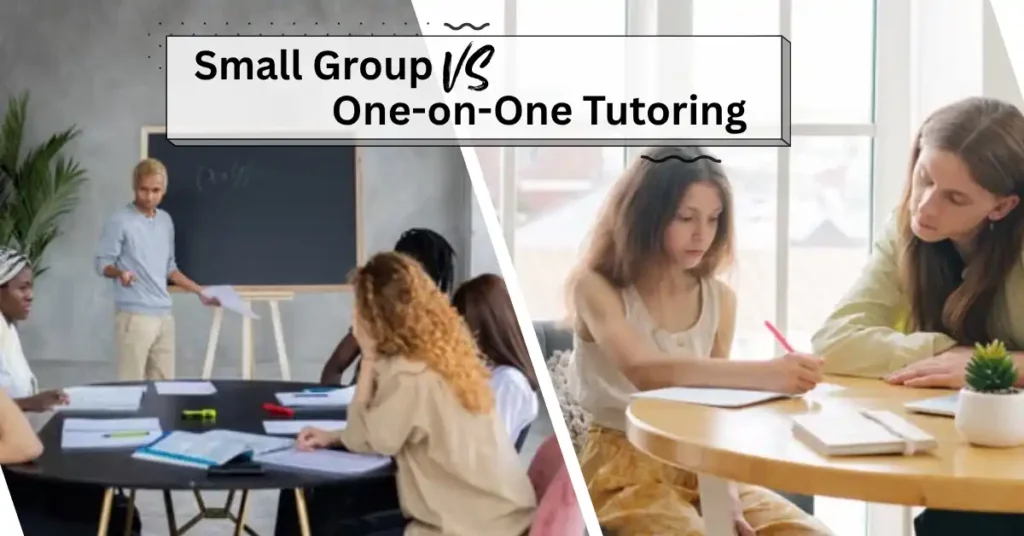
Small group tutoring involves a tutor working with several students during the same session. Groups are usually kept small so students can still ask questions and receive support.
For example, a maths tutoring session may have four students working on fractions. The tutor explains the topic, gives practice questions, checks their work, and helps students who are struggling.
Small groups can work well when students have similar learning levels and need help with the same topics.
Some benefits include:
- Lower cost compared with many one-on-one sessions
- Opportunities to discuss answers with other students
- Practice working with others
- A structured learning environment
- The chance to hear different approaches to the same problem
However, the tutor has to divide their attention between students. A child who needs frequent individual explanations may receive less direct support.
What Is One-on-One Tutoring?
One-on-one tutoring means one student works directly with one tutor.
The tutor can focus the entire session on that student. They can identify specific gaps, adjust explanations, change the pace, and provide additional practice where needed.
For example, if a student understands multiplication but struggles with division, the tutor can spend most of the session working on division instead of covering multiplication with a whole group.
One-on-one tutoring may be useful when a student:
- Has specific learning gaps
- Needs frequent explanations
- Finds it difficult to ask questions in a group
- Needs a slower or faster learning pace
- Is preparing for an important assessment
- Requires regular progress monitoring
The main drawback is cost. Individual sessions generally cost more because the tutor works with one student at a time.
Small Group vs One-on-One Tutoring
The biggest difference is the level of individual attention.
In small group tutoring, the lesson follows a shared structure. The tutor can still provide individual help, but the session needs to work for several students.
In one-on-one tutoring, the lesson can change based on your child’s progress.
Consider these factors before choosing:
- Learning needs
If your child has a few specific topics to improve, one-on-one tutoring may provide more focused support. If they understand most concepts and need regular practice, a small group may be suitable.
- Confidence
Some students become more comfortable when they see other students making mistakes and asking questions. Others feel nervous speaking in front of peers. Think about how your child normally behaves in group learning.
- Budget
Your budget matters. Small group tutoring can be a more affordable way to access regular academic support. One-on-one tutoring may cost more, so consider whether the additional individual attention is worth the difference for your child.
- Learning pace
Students do not always learn at the same speed. If your child needs lessons to move at a specific pace, individual tutoring can make this easier.
- Subject difficulty
A student may need different types of support for different subjects. They might manage English in a group but require individual help with maths.
Which Option Is Better for Primary Students?
There is no single answer. The right choice depends on the student.
A primary student who enjoys working with others may respond well to a small group. It can also help them practise explaining answers and listening to different ideas.
A student who has fallen behind in several areas may benefit from individual tutoring. The tutor can first identify the gaps and then build sessions around them.
Parents should also consider the child’s age, attention span, personality, current grades, and school workload.
How to Choose the Right Tutoring Format
Before enrolling, ask the tutoring provider a few practical questions:
- How many students are in each group?
- How does the tutor identify individual learning gaps?
- Can the lesson pace change for a student who needs extra help?
- How does the tutor track progress?
- What qualifications or teaching experience does the tutor have?
- Can you receive feedback about your child’s progress?
- What happens if your child needs more individual support?
A good tutoring arrangement should have clear learning goals. You should know what your child is working on and how progress will be checked.
Can You Combine Both Types of Tutoring?
Yes, combining small group and one-on-one tutoring can work for some students.
For example, a student could attend weekly group maths sessions for regular practice and have an individual session before an assessment to work on specific problem areas.
You could also start with one-on-one tutoring to address learning gaps and later move to a small group once the student feels more confident.
The important part is to review whether the arrangement is actually helping. More tutoring does not automatically mean better results.
FAQs
Is one-on-one tutoring better than group tutoring?
One-on-one tutoring provides more individual attention, but it is not automatically better. The best option depends on the student’s learning needs, confidence, pace, and goals.
Is small group tutoring cheaper than one-on-one tutoring?
Usually, yes. Small group sessions often cost less per student because the tutor teaches several students during the same session.
How many students should be in a small tutoring group?
There is no universal number, but smaller groups generally make it easier for tutors to give each student attention. Ask the provider how much individual feedback each student receives.